For most people, the air they breathe, the spaces they move through, the everyday products they use without thinking—all are invisible.
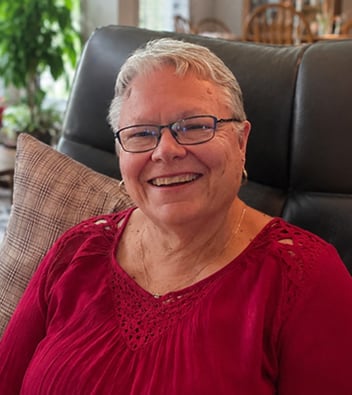
For Ginger Major, those same things can be life-threatening.
“It’s not just discomfort, or sensitivity to scents that give me a migraine,” she says. “I can’t breathe.”
A secondary school teacher and mother of five, Ginger has spent more than two decades living with multiple chemical sensitivity—a condition that has significantly shaped how she navigates the world. Today, exposure to common substances—fragrances, cleaning products, even hand sanitizer—can trigger severe respiratory reactions. In some cases, the risk is anaphylactic—particularly as everyday environments have become more complex, with layered product exposure. And those triggers are everywhere.
For years, Ginger found ways to adapt. Her school community rallied around her. Students reminded one another not to wear scented products before class. Colleagues made accommodations. She continued teaching the subjects she loved—history, law, civics—while raising five children.
But over time, the environment around her changed. Stronger chemical formulations. More layered products. Greater exposure in everyday spaces. Then came the pandemic. As hand sanitizer appeared in every doorway, every classroom, every shared space, what had once been manageable became overwhelming. “I couldn’t go into buildings anymore,” she says. “It was everywhere.”
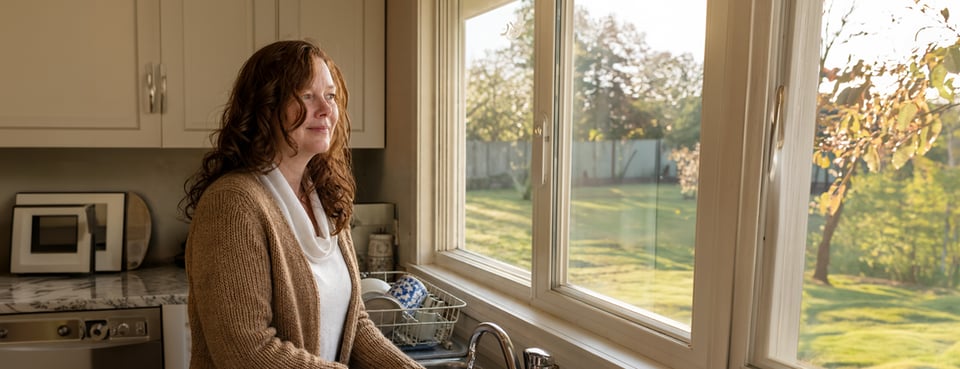
Today, Ginger is largely housebound. Even stepping outside can be unpredictable—everyday exposures like a neighbour’s laundry vent, fragranced products, a passing car, or a recently treated lawn can trigger a reaction.
She is now preparing to leave the city in search of something most people take for granted: clean air. “If I’m away from the chemicals, I’m fine,” she says. “I have my life back.”
What makes Ginger’s condition especially dangerous isn’t just its severity—it’s how invisible it is. In an emergency, first responders are trained to act quickly, following standard protocols designed to help. But in Ginger’s case, those same protocols could make things worse. “If I collapse and someone doesn’t know what’s happening,” she explains, “they could actually harm me without realizing it.”
And in those moments, she may not be able to speak for herself.
Ginger’s family understands her condition. Her children have grown up navigating it alongside her. They know what to watch for, how to help, and when to step in. But now that many of them are adults who live away from home, they can’t always be there. These days, that responsibility often falls to her youngest—her 13-year-old son. “That’s a lot of pressure to put on someone so young,” she says. And sometimes, Ginger is on her own—driving, running errands, or simply trying to maintain a sense of independence.
That’s why she wears MedicAlert.
“It gives me another layer of safety,” she says. “And some added independence. “If something happens, her medical ID signals that her condition is not typical—and that her response needs to be different. Her emergency health record provides the detail that a bracelet alone cannot: information that can guide a 9-1-1 response, help avoid harmful exposure, and ensure the right action is taken.
Even something as simple as moving her away from a trigger could make a difference. “It might give me a chance,” she says. “And that’s everything.”
Ginger knows her condition is no longer as rare as it once was. More people are experiencing chemical sensitivities. Environments are becoming more complex. And more individuals are living with health risks that don’t fit neatly into standard categories.
Her story is a reminder of something many people don’t consider: Emergencies don’t always look the way we expect them to. And the right help isn’t always the right help—unless the right information is there.
At the center of everything is Ginger’s family. “I need this,” she says simply, “so I can be there for my kids.” Because when something happens and you can’t explain it yourself, the right information can mean the difference between risk and response.
And sometimes, that difference is everything.
Are you an individual with a chronic medical condition? Learn how MedicAlert can provide peace of mind, protection, and support at medicalert.ca/signup or call 1-800-668-1507 today.
Are you a MedicAlert subscriber and would like to share your story? We would love to hear from you! Share your story.